Why Type 241.1 Flexible Mining Cables Are Essential for Underground Operations?
Deep in the bowels of the earth, mining operations rely on heavy-duty machinery, which needs to function perfectly no matter the tough conditions. From mining machines that do cutting operations for you and even underground pumps up to heavy lifting machines and power distribution units, all rely on a reliable electrical supply. The challenge comes not only with the harsh environment but also with the fact that the way you supply power underground can't be the same way as for typical surface industrial units.
Mining cables must be able to handle constant physical movement, pressure from a number of mechanical directions, moisture, wear from friction, and other severe operating conditions while still transmitting power reliably. Hence the need to have mining-specialist flexible cables. Of the variety of cable solutions engineered to cater for these conditions, Type 241.1 Cable is one of the cable types widely used in underground coal mines. It has been tailor-made not just for flexing power supply requirements but also has a combination of design and material that makes it ideal for demanding mining settings.
What is special about this wiring that makes it a part of underground mining infrastructure and yet why should getting the right wire be your priority? Let's find out.
Electric Supply in the Underground Mining Area is a Unique Problem
Picturing the work going on in a deep continuous miner machine, which cuts a path in the darkness of the mine. It passes through tight corridors, excavates a big hole and all the energy from electricity powers its movement. If the power supply gets interrupted for even a second, that machine will halt, and so will the production. The same goes for the power cable, which is to remain intact and not get in bad condition while it is carrying out the work for the machine.
Compared to the conventional setup of the factory, underground mines present various difficulties in terms of electrical work:
- Ongoing movement of the machine, which changes the position frequently, so it needs a power source that is flexible enough to handle bending and twisting without breaking after the first use.
- Mechanical exposure refers to the contact that cables may have with the environment. This includes the rubbing action of abrasive materials, heavy pressure or even sudden impact.
- Wetness and water: it cannot be said that underground is not a suitable place for water but at least water is a serious danger that electrical cables have to deal with in such conditions.
- Limited installation spaces tight clearances and complex equipment layouts dictate the need for cable flexibility and routing.
Better yet, the regular kinds of industrial cables just won't be able to serve the purpose for many underground situations because the working conditions are too harsh. It goes without saying that the use of electrical wires that have already been put into mining applications is a must. However, in order to choose the right wire with the required characteristics, one must go into the technical details of electrical wires in mining conditions.
What Makes Type 241.1 Mining Cable Different?
Actually, a mining cable is more than a simple conductor covered with insulation. A mining cable is made up of several interlocking parts designed with a specific function for each.
It might be considered as a power conductor or a control conductor and sometimes it serves the double function of both. That is the case with most mining power cables, including the Type 241.1.
Type 241.1 mining cable is a family of flexible cables mainly used in the mining industry and especially underground for powering coal mines, continuous miners, pumps, and other types of power requirements.
It is typically assigned a 1.1/1.1 kV voltage level and is manufactured to meet the corresponding AS/NZS 1802 standards depending on the relevant product specification.
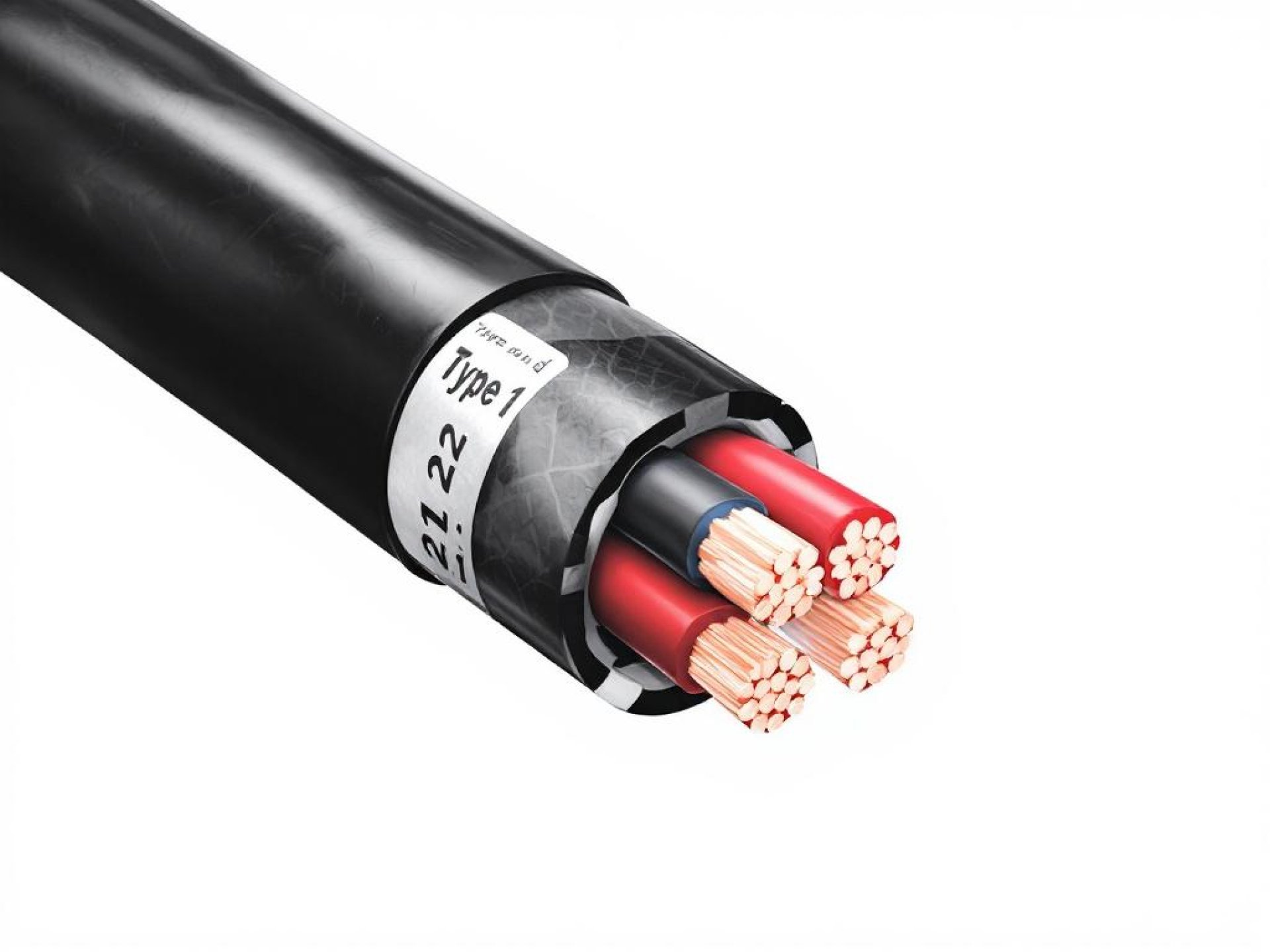
The structure of this cable usually includes stranded flexible copper power conductor insulation, earth conductors, a pilot conductor, reinforcement, and an outer heavy-duty sheath. The combination of these different parts makes the cable suitable for the most arduous conditions of underground mining.
This cooperation of different cable parts is what really gives you the advantage: support of electrical performance reliability and mechanical damage resistance.
Inside View of the Cable: The Hidden Engineering of Cable Performance
Besides the fact of knowing about these cable parts and features, it will become apparent that such cable construction is perfectly suitable even for very specific mining applications.
1. Flexible Copper Conductors for Steady Power Transmission
Mining cable is designed with flexible stranded copper conductors that keep delivering electric power without any problems, no matter if it is moved or bent constantly. The flexible nature of such conductors makes them more resilient than solid ones. Therefore, those mining cables that contain such stranded conductors are ideal for handling equipment that needs constant movement and repositioning.
This property is very helpful for underground mining where equipment is being moved frequently.
2. EPR Insulation Providing Electrical Protection
Due to its electrical and thermal characteristics, Ethylene Propylene Rubber (EPR) insulation is a very common practice in mining cable production.
Firstly, it acts as the insulation for power conductors and helps in the prevention of the electrical short between wires. Also, the flexible property of the material suits the requirements of those applications where the cable must be bent or twisted quite frequently.
3. Earth Conductors for Critical Safety Function
Mining cable designers include dedicated earth conductors as part of a mining cable's electrical protection system.
In Type 241.1, it has been arranged that there will also be earth conductors situated in between the power cores with insulation of semiconductive material around them. These are part of the underground earthing system, helping create a suitable channel for fault currents, assuming the cable will be part of a proper electrical system installed, maintained and operated.
4. Central Pilot Conductor, Monitoring and Control
The other important design consideration is a central conductive pilot conductor of the cable.
It can be used in conjunction with mining equipment and its supply wiring for purposes of monitoring and control. Its existence ensures that the cable is an acceptable choice where pilot-circuit requirements constitute a part of the installation design.
Underground Usage Where Only Mining Flexible Cables Will Do
When the kind and variety of the machinery they are used for are taken into account, mining cables seem all that more specialized and tailored to the underground conditions.
1. Continuous Mining Machines
Mining equipment in continuous mode of operation should have an uninterrupted electric supply while moving in the underground area of extraction. The mining cables that are flexible have been devised not only to withstand but also to satisfy all electrical and mechanical requirements of mining machines.
2. Underground Pumping Systems
Flooding of underground mines may lead to dangerous working, so the removal of water by pumps is a crucial part of the mine's operation. When necessary, type 241.1 cables can serve as a power supply for suitable pump systems.
3. Mine Power Feeder Connections
Electrical power needs should be met by distributing power from the various power points down into the mine's machinery and other equipment. Flexible feeder cables are the right choice whenever the setup calls for a cable arrangement that allows moving.
4. Underground Material Transport Equipment
Many varieties of mining vehicles are employed in the underground transportation of goods and support of production activities. Special kinds of flexible cables that match the electrical connection requirement of the particular piece of machinery can be recommended.
Conclusion: Dependable Mining Performance Begins with Quality Cable Solutions
With the rise in equipment dependency of underground mining operations, it is becoming evident that reliable electrical infrastructure will continue to be a growing necessity. Choosing the right flexible mining cable has the potential to greatly impact the levels of equipment connectivity, maintenance requirements, and operational continuity.
Type 241.1 cable provides an excellent example of how specialized cable engineering can handle the electrical and mechanical challenges typical of underground mining through its design. Whether it is a continuous miner, pumping system, or an underground feeder, the cable's design is geared to endure tough and flexible usage conditions simultaneously.
If you need to be assured of mining cable solutions that are truly dependable, Znergy Cable is certainly worth taking into consideration for its attention to specialized cable needs and the value it gives to quality in industrial electrical applications. Moreover, by being committed to the right cable solutions for harsh environments, Znergy Cable reflects the value of having an Electrical Cable Manufacturer that is knowledgeable and fully understands the role electrical infrastructure plays in the modern mining industry.
The correct cable type is actually a vital element of equipment in mining, not only a component. With the underground operations always being powered and functioning productively, it can be considered a crucial connection element.
Also Read: Top Armoured Cable Manufacturers in Australia: A Complete Guide