Why Choose Type 409 Cable? Durability and Performance Compared
Mining work is one type of job where the electrical system is constantly under great pressure. A large part of mining is done with the use of big machines that move around in large open-cut mines and the drills that work under heavy loads; all of these pieces are subject to the stress of mechanical wear, the elements around and the harsh working environment. For something like that, the power cable used isn't just a technical detail; it's directly linked to how reliably the operation will take place, to how good the equipment is, and to how seldom the maintenance is needed.
For that reason, the Type 409 Cable should be considered as one of the options. This cable is suitable for surface and open cut mines, as it is built up with a flexible structure and a thick outer layer and is electrically protected to enable reliable power transfer in a really rough environment.
What is the reason that Type 409 differs from other mining cables? Are there elements of its structure that make it more durable? What are the factors that companies should be looking at when making a decision on it? To this end, we shall take a closer look at the design features of this cable and also the places that are most affected by its benefits.
1. Mining Environment Doesn't Offer Cables a Chance to Fail
A prerequisite in order to evaluate the performance of different cables under a mining scenario is to first get an idea of the types of harsh conditions a power cable gets to endure under a mining setup.
Conventional industrial installations, as a matter of fact, are totally different from mining environments, where cables are subjected to the effects of moving equipment on the one hand, physical abrasion and bending of cables on the other hand, and exposure to oil and water as well as to sunlight. This is not a simple combination; rather, it is a situation where multiple effects are acting on the materials making up the cable at the same time.
If a particular cable works well in a factory setting, that doesn't mean the same level of reliability will be obtained when it is put into the field at a surface mining facility.
Some typical challenges a mining cable faces are:
- Mechanical Wear: When a cable is continuously dragged over rough terrain, its outer layer will be gradually worn away.
- Bending: The repeated trailing and reeling operations put a lot of mechanical stresses on the cable's conductor and insulation layers.
- Dampness: When a cable gets exposed to water or high humidity conditions, the right insulation and sheath are crucial.
- Potential: For high-voltage equipment, the insulated systems have to be specially designed for the operating conditions.
Such conditions are what require cable manufacturing and material selection to be really thought of after.
2. What Makes Type 409 Cable Different?
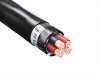
The Type 409 cable is a trailing Class 2, composite-screened three-core cable made for open-cut and surface mining. Combining three EPR-insulated power conductors, three interstitial earth conductors, a central pilot core and a collective composite copper wire screen, the cable is well adapted for the mining environment.
The assembled bundle can withstand harsh weather conditions as it is protected by a robust PCP or, according to selected variants, a CSP/CPE outer sheath.
This cable has electrical safety, mechanical protection and flexibility features, which are the basics in the mining industry.
Voltage range is one of its main features, covering 1.1/1.1 kV up to 22/22 kV cable depending on the cable variant.
The cable construction meets the AS/NZS 2802 standards, which are a requirement in the mining industry, where cables must comply with applicable Australian Cable Manufacturers standards at all times.
Instead of relying on a single protection factor, Type 409 utilizes several construction factors to cope with surface mining requirements.
3. Inside the Construction: Where Durability Meets Engineering
The materials and design of the cable play an important role in its performance and, in the case of a mining cable, its ability to survive the harsh mining environment. The mining cable Type 409 includes some design elements that make it a good choice for difficult conditions.
Flexible Copper Conductors
Class 5 flexible strand, tinned soft copper conductors with rope lay type are used in Type 409. This method ensures flexibility while the cable is continuously being moved, thus enabling the cable to withstand the requirements during trailing situations.
Besides its high conductivity properties, the tinned conductor also gives it enhanced resistance to corrosion when compared to the untreated copper conductor in the normal working conditions.
EPR Insulation for Electrical Protection
Packaged around the power conductors is another component, EPR (ethylene propylene elastomer) insulation.
On one hand, it serves as a dielectric material for the insulation of wires and on the other, it enables the flexibility of the mining equipment to be in motion. Insulating thickness is determined by the voltage rating of the cable.
4. Type 409 vs Other Mining Cables: Understanding the Performance Differences
Each mining cable type is not a copycat; every mining cable has unique qualities. It is only through an understanding of their physical structures, screening features, and the operating conditions for which they are built, that one could choose between them effectively."
Below is our explanation of how Type 409 stands against other types of mining cables.
Type 409 vs. Type 209 Cable
Two cable types follow the same numbering pattern in their structural designs, but they are different in what they are meant for.
To put it in a simple way, Type 209 is the kind of cable used in underground mining, whereas Type 409 refers to open-cut and surface mining cable types.
We make a very clear boundary of that distinction as well, that the way things are underground compared with how they are on land differ very much, hence the different kinds of installation and operational requirements. Therefore, picking between them is only dependent on your machine, where you will use it and the kind of electrical standards that are applicable.
Type 409 vs. Type 441 Cable
A big part of how Type 409 and Type 441 are different from each other has to do with the arrangement of their screens.
Covering of the whole bundle with the common composite screen material is the characteristic feature of the Type 409 cable. A type 441 cable, on the contrary, contains the screens around every power core separately.
This type of screen design plays a major role when it has to do with the level of electrical protection and earth fault detection requirements that come with the piece of mining equipment. It is quite likely the Type 441 would be the more appropriate choice in such a scenario where the need to detect earth faults on a per-phase basis is paramount, whereas for that of a collective screening-based design, Type 409 is the go-to choice.
Conclusion: Invest in Cable Performance That Supports Demanding Operations
Selecting the right Mining Cable requires much more than merely comparing voltage ratings or construction materials. It is primarily understanding how the cable behaves under constant movement, mechanical stress and different environmental conditions.
Type 409 Cable, with flexible copper conductors, EPR insulation collective composite screening and a heavy-duty outer sheath, is specially designed for use in open-cut and surface mining. Its design makes it capable for draglines, shovels, drilling rigs and surface conveyors when properly matched to the operation requirements.
Znergy Cable, an Australian company, deserves special recognition for its engineering approach and specialization in mining power, tunnelling and industrial cables when assessing mining cable solutions. They combine Australian engineering, controlled manufacturing, and application-specific cable solutions to ensure the reliable delivery of their cables to demanding industries. Its focus on quality, technical capability and performance would make Znergy Cable an extremely good choice for companies needing reliable cable solutions.
Also Read: How to Choose Australian Mining Cable for High-Stress Open-Cut